
Presently the following major activities are being conducted by the Sabha:-
1.Indian Language Alliance Collaborative Expressions

(a) Indian Languages Library- Sannidhi is proud of its rich library, which houses over 30,000 valuable books, ancient and new. Rare books are available in many languages from across India and the world.
(b) Center for Indian Language Studies-The preservation and promotion of Indian languages are essential for fostering national emotional integration; with this objective in mind, the institute continuously conducts programs to teach various languages. These include certificate and diploma courses in languages such as Gujarati, Marathi, Urdu, Sanskrit, Tamil, Telugu, Kannada, Hindi, Punjabi, Malayalam, and Bodo.
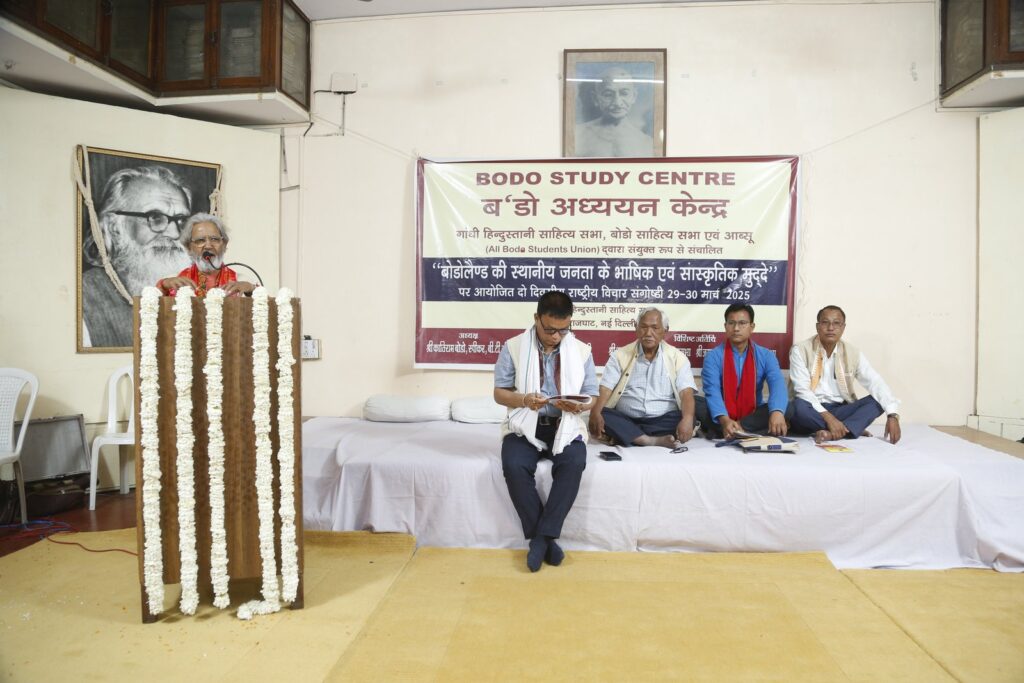

(c) Indian language, Literature-Seminars, workshops, lecture series, and training programs are organized on themes related to Indian culture and Gandhian philosophy. The organization conducts academic activities across the country on subjects associated with Indian languages, particularly tribal languages. A unified stream of Indian culture flows through the literature of all Indian languages, and various programs are organized to highlight its major dimensions. Over the past several decades, numerous national conferences and seminars have been organized focusing on the linguistic and literary aspects of non-scheduled languages and tribal communities. Special lecture series are also conducted to establish the relevance and indispensability of Gandhian thought in contemporary times. The memorial lecture organized on 21 August, marking the death anniversary of revered Shri Kakasaheb, is particularly noteworthy. Several training programs based on Gandhian philosophy are also organized in New Delhi, Rajasthan, and Assam.
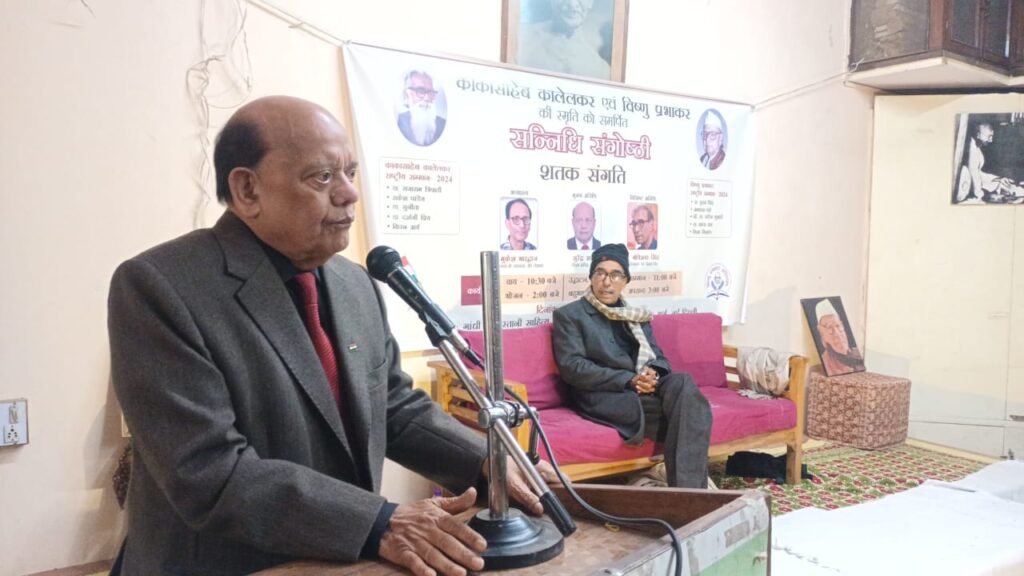
(d) Sannidhi Seminar (monthly, based on Hindi literature)—The Sannidhi Seminar is held every month under the joint auspices of the Gandhi Hindustani Sahitya Sabha and the Vishnu Prabhakar Pratishthan. This initiative aims to provide a platform for writers from various genres of Hindi literature and to introduce them to the works of renowned Hindi writers. Renowned writers are also invited to guide and encourage new writers.
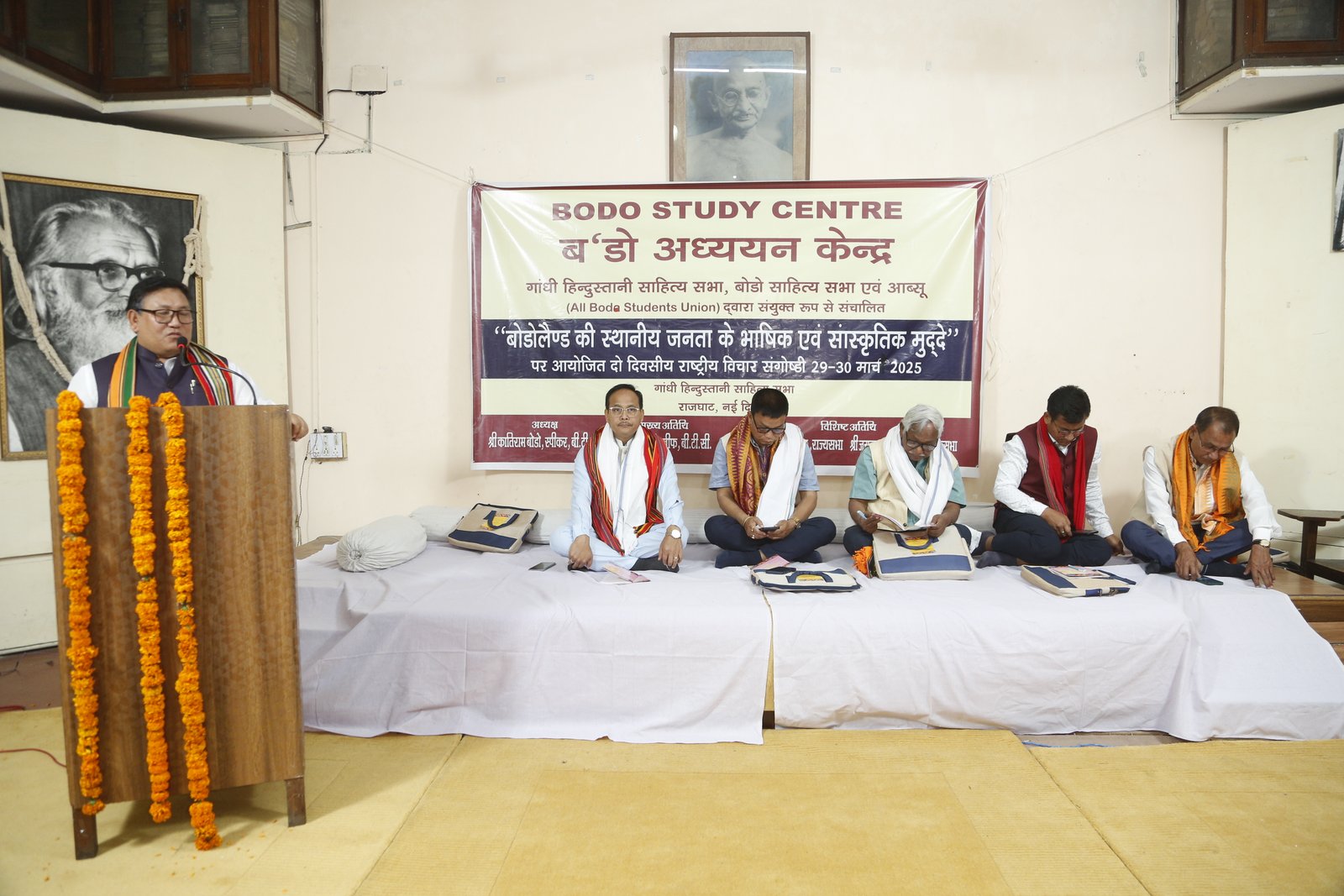
(d) Bodo Study Centre (for promotion of tribal language, literature and culture including Bodo of North-East India.)
Gandhi Hindustani Sahitya Sabha has organized numerous academic events over the past 25 years to promote and preserve the tribal languages, literature, and culture of Northeast India. To organize this work, a Bodo Study Center has been established in 2024-2025. This center works in collaboration with government, social, literary, and cultural organizations in Assam, especially Bodoland. Currently, officials from the Bodo Sahitya Sabha and the All Bodo Students' Union serve on its advisory board.
A grand celebration of the Bodoland Festival was held at the Indira Gandhi Stadium on November 16-17, 2024. Over 6,000 Assamese people participated in the event, attended by the Honorable Prime Minister, Shri Narendra Modi.
A two-day workshop was organized on 29–30 March 2025, in which more than 100 linguists, writers, and cultural practitioners representing languages such as Barman Kachari, Barman Mandai, Bhojpuri, Garo, Gorkha, Hajong, Koch Rajbongshi, Kurukh (Oraon), Madahi Kachari, Munda, Rabha, Santhal, Sadriya Kachari, Bengali, and Bodo participated. The theme of the conference was “Linguistic and Cultural Issues of Various Communities of Bodoland.” The workshop was attended by several distinguished dignitaries including Shri Pramod Bodo, Chief of the Bodoland Territorial Council (BTC); Shri Katiram Bodo, Speaker of BTC; Shri Jayanta Basumatary, Member of Parliament (Lok Sabha); Shri R. Narzary, Member of Parliament (Rajya Sabha); Smt. Kusum Shah, Chairperson of the Sabha; Prof. Surat Narzary, President of the Bodo Sahitya Sabha; Prof. Abdul Aleem, Advisor of ABSU; Prof. Shobha Satyanath, Prof. T.S. Satyanath, and other eminent personalities.
Professor Ramesh Bhardwaj, coordinator of the Centre for Bodo Studies, coordinated the workshop. According to the workshop's decisions, a meeting will be held in May-June 2025 with experts and various organizations in Assam.
On September 6-7, 2025, the Bodo Study Centre, run by the Gandhi Hindustani Sahitya Sabha, in collaboration with the Bodo Sahitya Sabha, Assam, and ABSU, organized a workshop at Barpeta Road, Assam. Twelve professors from various universities and colleges in Assam participated in the curriculum development and textbook development for teaching the Bodo language through offline/online programs.
The workshop was inaugurated by Prof. Surat Narzary, President of the Bodo Sahitya Sabha, and Mr. Dipen Bodo, President of ABSU. Mr. Nilakanta Gayari, General Secretary of the Bodo Sahitya Sabha, moderated the workshop on both days. Among the professors present at the workshop was Padmashree Prof. Anil Bodo of Gauhati University.
(f) Centre for Foreign Language Studies – Several foreign languages, such as Arabic, Persian, and Japanese, have been taught here for many years. This is a one-year diploma course.
2. Literary publications
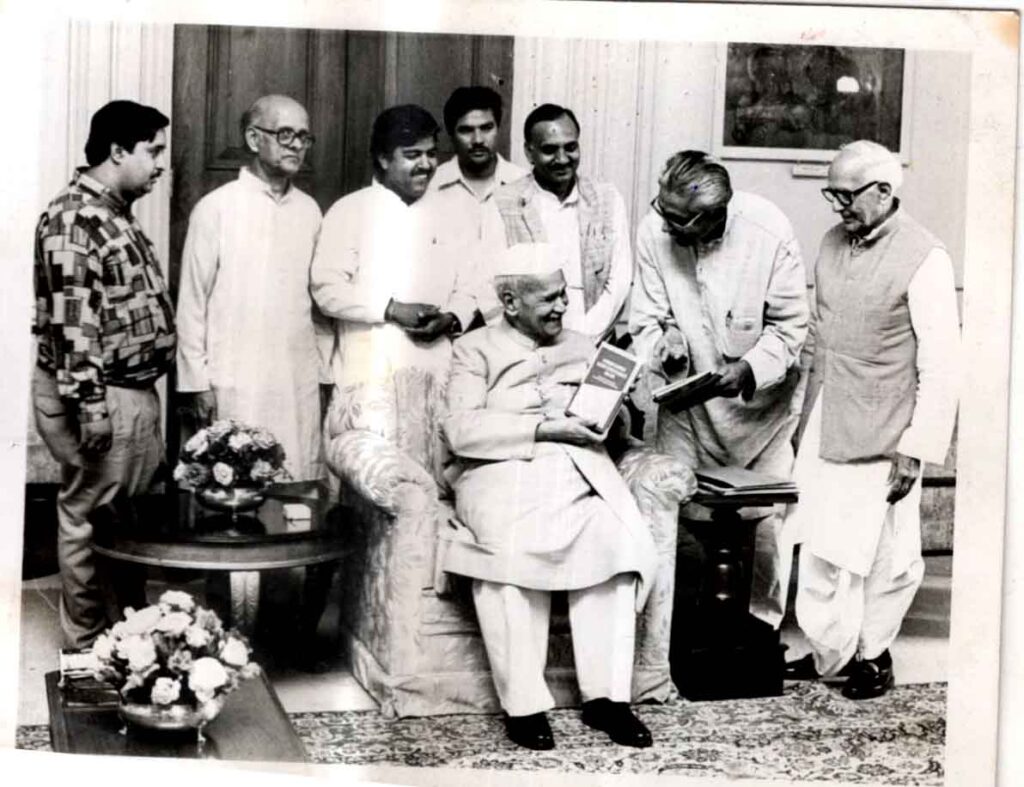
(a) Literary publications- The Sabha prepares and publishes books on Indian languages (including tribal ones) and their literature, and on Gandhian thought, in various languages such as Hindi, Urdu, Gujarati, Marathi, English, and other Indian languages. More than two hundred volumes have been published since the organization's inception.
(b) Gandhi Literature Store- The Sabha operated the "Gandhi Sahitya Bhandar" at the Gandhi Samadhi, Rajghat, for 60 years. It showcased and sold Gandhian thought and national literature. Currently, this practice operates from an outdoor room within the institution's auditorium.


(c) Mangal Parbhat- This is the organization's monthly magazine. Its first issue was published on January 26, 1950. Acharya Kakasaheb Kalelkar served as its editor for the first 30 years. Dedicated to promoting the culture of integration of Indian languages, this magazine has been published continuously for the past 75 years.
3. Cultural activities

(a) Meenakshi Mathur Memorial Music Centre- The Gandhi Hindustani Sahitya Sabha offers classical singing and dance classes. These classes are contracted with the Prayag Sangeet Samiti. Approximately 500 to 800 students benefit from this program each year.
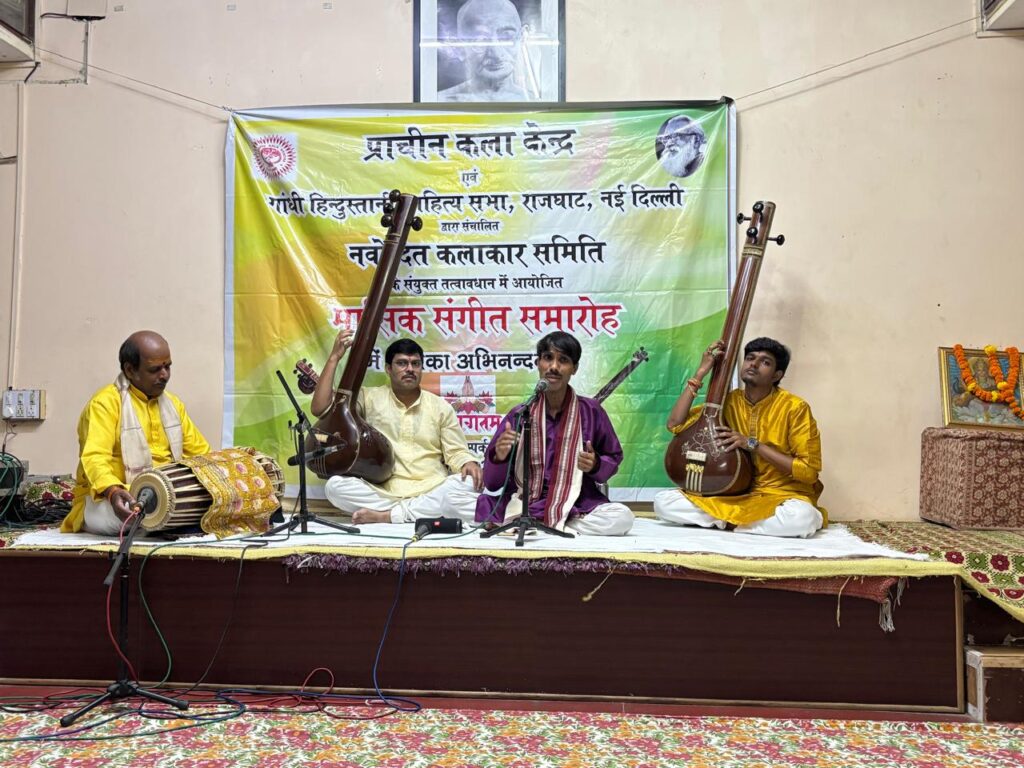
(b) Budding Artists Committee- A musical evening is held on the last Saturday of every month to provide a platform for new classical music artists. Many renowned classical musicians participate in this event. This tradition has continued uninterrupted for many years. Many artists are also honored. Once a year, an annual music festival is held in the large hall for two days.

(c) Dramatic Arts Troupe- The Dramatic Arts Group of Gandhi Hindustani Sahitya Sabha regularly experiments with expressing various literary works of the country through theatre and other performing arts mediums.
Many artists trained professionally at the National School of Drama are actively associated with the Natya Kala Mandali and through their creative work, they continue to stage special works of Hindustani literature at the institute.
4. Constructine Programmes
Before the COVID-19 pandemic, the organization offered various activities for the benefit of the surrounding community, including kindergarten, sewing training, computer training, and typing training. The current activities are as follows:–

(a) Charkha Training and Khadi Regulation Centre- Gandhiji called the spinning wheel the sun at the center of nation-building. The organization not only teaches spinning, but also provides cloth, khadi, or other essential commodities such as pulses, rice, soap, wheat, and notebooks in exchange for the spun yarn. Thousands of delegates from more than 15 countries have learned spinning through this center.
(b) Spinning wheel at Gandhi Samadhi- Spinning Yagya - The organization regularly organizes the continuous spinning yagya at Gandhi Samadhi on 2 October and 30 January.


(c) Organising competitions on Gandhian thought at school and university level. To spread Gandhian thought among students, various competitions are organized for school and university students, such as essay writing competition, patriotic song competition, painting competition, and speech competition, etc.
5. co-ordination of all religions
(a) All religion coordination prayer- The organization holds a Gandhian-inspired prayer for religious harmony every day at 7 a.m. All members and guests participate in this prayer meeting. Occasionally, a lecture by an enlightened person is also organized.
(b) Organising an all-religious festival Special prayers, symposia, or discussions are held on various religious festivals. Essay or other competitions, such as recitation of verses from the Ramcharitmanas, the Gita, and the Guru Granth Sahib, are held. This is a specific trend toward promoting religious harmony in accordance with Gandhian thought.
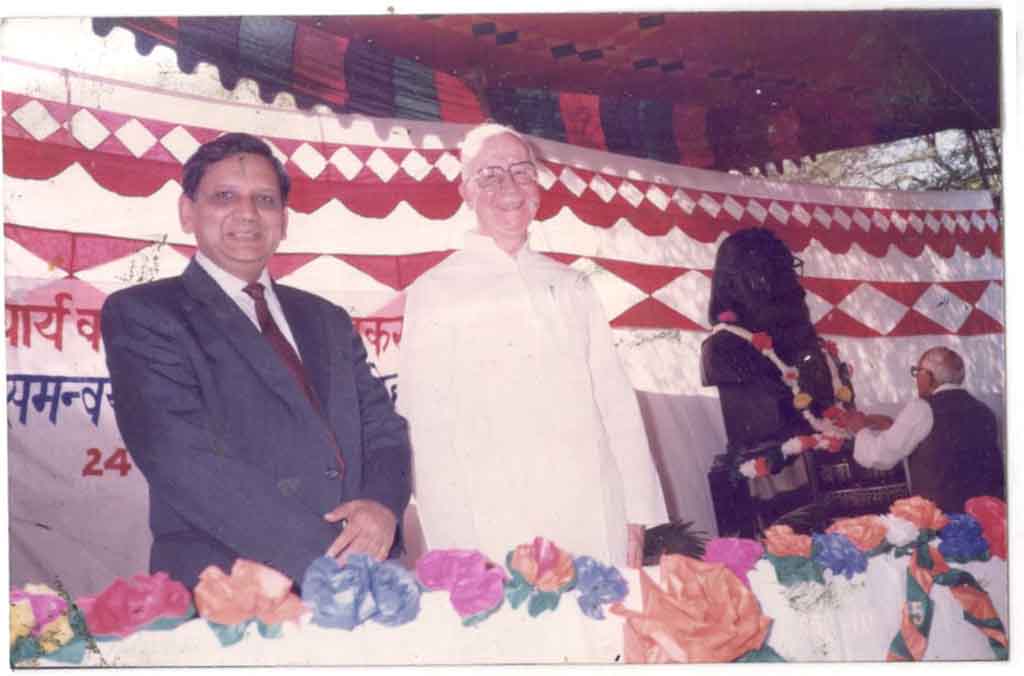

(c) Acharya Kakasaheb Kalelkar World Coordination Award- The organization presents this award to an individual or organization that has played a significant role in fostering harmony between different religions, communities, castes, and cultures. The award is presented under the joint auspices of the Kaka Kalelkar Sarvodaya Seva Trust.
(1) Mrs. Fatima Meer (South Africa)
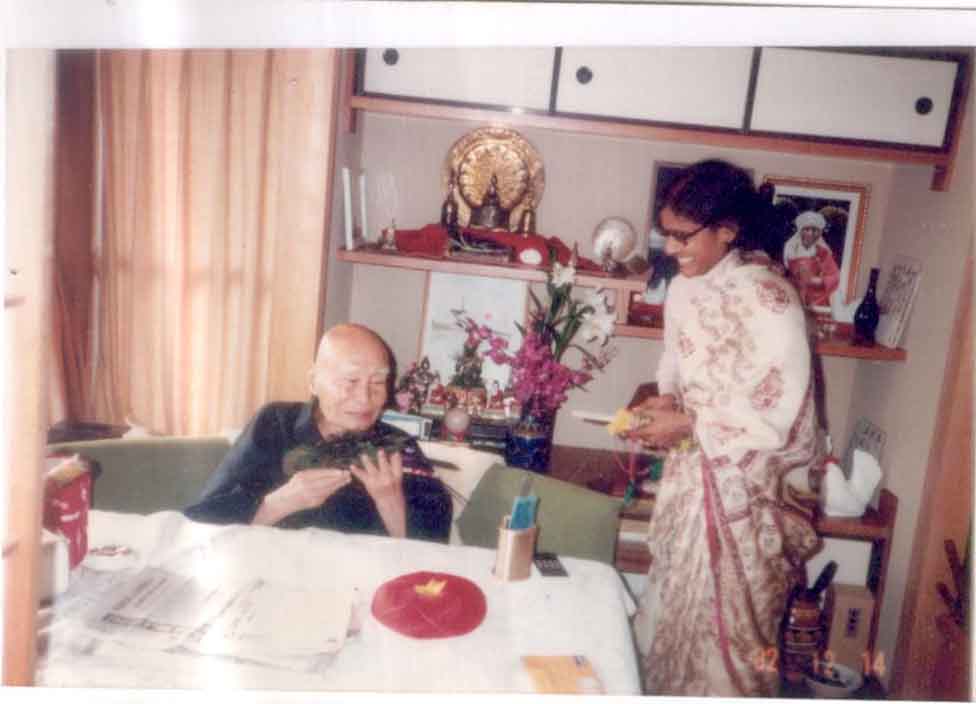
(2) Mr. K. Okamoto (Japan), (3)
(3) Father Valles (Spain)
(4) Dr. Lokesh Chandra,
(5) Advocate Shri Indrajit,
(6) Shri Mangatram Singhal,
(7) Shri Virendra Prabhakar
has been honored with this award so far.
(d) Exhibition- Exhibitions of Acharya Kakasaheb Kalelkar's paintings are held periodically at various locations across India. Exhibitions were held at several locations across the country to mark Kakasaheb's birth centenary and his 125th birth anniversary. Exhibitions are held annually on December 1st and August 21st.

6. Acharya Kakasaheb Kalelkar Memorial Museum
On the centenary of the foundation's founder, Kakasaheb, a small museum was inaugurated by the then Vice President, Dr. Shankar Dayal Sharma. This museum houses all the items used by Kakasaheb.
7. Our Affiliates
On the birth centenary of the founder president of the Sabha, Acharya Kakasaheb Kalelkar, two village development centres of the Sabha were established in his memory. ‘Acharya Kakasaheb Kalelkar Public Service Centre’ were established under the name of the Sangathan Sangathan. For the first 20 years, these centers functioned as branches of the main Sabha. Currently, they function as independent organizations.
(1) आचार्य काकासाहेब कालेलकर लोकसेवा केन्द्र, नन्दुरबार (महाराष्ट्र) जिसकी निम्नलिखित गतिविधियाँ हैं:-
(a) Kindergarten (Crèche)- In Maharashtra, 16 crèches and Nutan Bal Mandirs operated in villages in the Nandurbar district with financial support from the Central Social Welfare Board. This institution was established in 1990. Children of mothers who work outside the home or in the fields attend this institution.
(b) Sewing Centre- Tailoring centres were run at various places by Acharya Kakasaheb Kalelkar, Nandurbar, Maharashtra.
(c) Children's Library- Children's literature is available in Hindi, Marathi, Gujarati, and English for children's learning. Local students also benefit from the library.
(d) Spinning Class and Khadi Centre- In our centre Nandurbar, the work of spinning charkha and khadi went very well.
(e) Kalelkar Computer Centre- In February 2012, Advocate Shri Raman Bhai Shah and Advocate Shri Ketan Shah donated one acre of land for the permanent building of the Acharya Kaka Kalelkar Public Service Center. The center aims to spread Kakasaheb Kalelkar's message of harmony through Gandhian constructive work in society.
(f) Chandriba Coordination Niketan On December 8, 2013, Chandraba Samanvay Niketan, located within the Acharya Kakasaheb Kalelkar Public Service Centre, was inaugurated in Narayanpur, Nandurbar district (Maharashtra). One hundred trees were planted there. Initiatives for child welfare and women's development are underway.
(2) आचार्य काकासाहेब कालेलकर लोक सेवा केन्द्र, बड़गाँव, जिला बूंदी (राजस्थान)
This centre was established in the year 1997. It was inaugurated by the then MP and former President Shri Ramnath Kovind ji.
Five acres of land have been donated for the Centre's permanent campus. The Centre aims to propagate Kakasaheb Kalelkar's message of harmony within society through Gandhian constructive activities. To fulfill this objective, the Vaidyaji family donated the land in 1997 in loving memory of their brother, the late Shri Bhana Ram Ji.
(a) Cowshed – The facility comprises three permanent RCC-roofed sheds, three permanent sheds with tin roofing, a two-room guest house, an office, three quarters for caretakers, two large storerooms, and two spacious, permanent fodder storage units. The entire complex is enclosed by a permanent boundary wall. Shelter is provided here for over three hundred elderly, sick, and destitute cows, with arrangements made for their fodder, housing, and medical treatment. Medical camps are also organized monthly for the animals belonging to the *gaushala* (cow shelter) and local farmers.
(b) Watershed Project- With the support of CAPART (run by the Government of India) and local residents, the Gandhi Hindustani Sahitya Sabha successfully implemented a watershed development project in Badgaon, Bundi district, Rajasthan. The project was initiated in the year 2000 and completed in 2011. The total expenditure incurred was ₹8,303,264 (comprising ₹6,506,767 in grants and ₹1,796,496 in other donations); through this initiative, a total area of 2,033 hectares was developed using concrete and earthen structures.
(c) Symposium- Seminars are also organised twice a year for the enlightenment of students and women.